
Neurofeedback for Trauma
A Brain-Based Approach to Healing Anxiety, Flashbacks, and Emotional Dysregulation
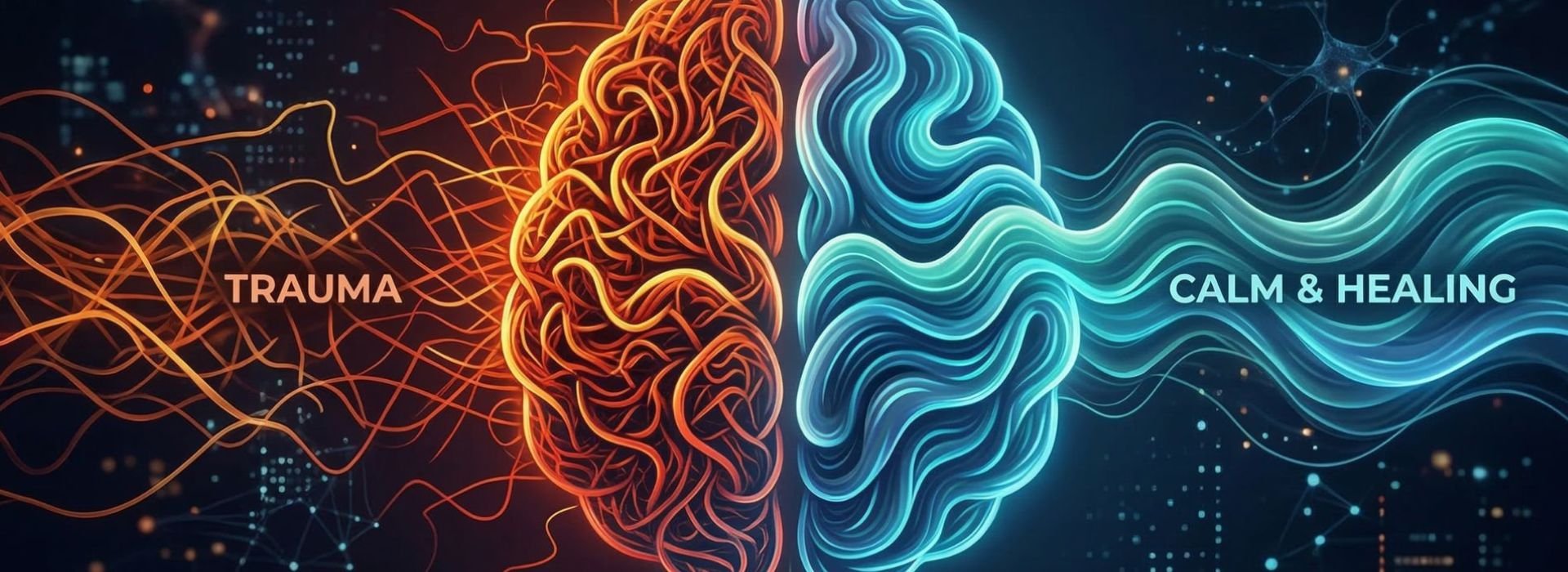
Trauma can affect far more than memories.
For many people, trauma symptoms show up as ongoing nervous system dysregulation, including:
anxiety that feels constant or unpredictable
panic attacks
emotional overwhelm
irritability or anger
flashbacks or intrusive memories
dissociation or feeling disconnected
sleep disruption or nightmares
Even when someone wants to move forward, their brain and nervous system may remain stuck in survival mode.
This is where neurofeedback can be an incredibly powerful support.
Neurofeedback helps train the brain to regulate itself more effectively, allowing the nervous system to become calmer, more stable, and better able to process stress.
How Trauma Affects the Brain
Trauma can disrupt the brain’s ability to regulate stress.
When the brain perceives danger, it activates survival responses such as fight, flight, or freeze. For many people with trauma, these systems remain overly sensitive long after the original event.
This can lead to symptoms such as:
hypervigilance
sudden anxiety
emotional reactivity
difficulty relaxing
sleep disturbances
The brain essentially becomes stuck in a pattern of threat detection.
Neurofeedback helps retrain these regulatory networks so the brain can learn that it is safe to return to a more balanced state.
What Is Neurofeedback?
Neurofeedback is a non-invasive brain training technique that helps the brain improve its ability to regulate itself.
During a session:
Sensors are placed on the scalp to monitor brain activity.
The client watches a movie or visual display.
The brain receives subtle feedback through visual and auditory changes based on the brains activity patterns.
Over time, the brain learns to stabilize its own activity and improve regulation.
This process supports improvements in areas like stress tolerance, emotional stability, and sleep regulation.
Trauma Symptoms Neurofeedback Can Help Target
Neurofeedback works particularly well for trauma-related symptoms connected to nervous system regulation.
Anxiety and Chronic Stress
Many trauma survivors live in a state of constant tension or hypervigilance.
Neurofeedback helps the brain learn to downregulate stress responses, allowing the nervous system to settle.
Clients often report feeling:
calmer
less reactive
more emotionally stable
Panic Attacks
Panic attacks can feel overwhelming and unpredictable.
By improving how the brain regulates stress responses, neurofeedback can help reduce the intensity and frequency of panic episodes.
Emotional Dysregulation
Trauma often affects the brain networks responsible for emotional control.
This can lead to:
sudden anger
emotional flooding
difficulty calming down
feeling overwhelmed by stress
Neurofeedback helps strengthen the brain’s emotional regulation systems, allowing clients to respond rather than react.
Flashbacks and Intrusive Memories
Flashbacks occur when the brain’s threat system becomes activated by reminders of past trauma.
While neurofeedback does not erase memories, it can help the brain become less reactive to triggers, reducing the intensity of intrusive experiences.
Dissociation and Feeling Disconnected
Some individuals respond to trauma by becoming disconnected from their emotions, body, or surroundings.
This may feel like:
spacing out
emotional numbness
feeling unreal or detached
Neurofeedback works to stabilize brain networks that support present-moment awareness and nervous system balance.
Sleep Disruption and Nightmares
Sleep problems are extremely common in people with trauma.
These can include:
difficulty falling asleep
frequent waking
restless sleep
trauma-related nightmares
Because neurofeedback helps regulate the brain’s stress systems, many clients notice improvements in sleep quality and nighttime calmness.
Why Neurofeedback Can Be Especially Helpful for Trauma
Traditional talk therapy can be extremely valuable for trauma healing. However, trauma is not only stored in thoughts and memories—it is also deeply connected to the nervous system and brain regulation.
For some individuals, talking about trauma can feel overwhelming when the brain is already dysregulated.
Neurofeedback helps create a foundation of nervous system stability, making it easier for clients to engage in therapeutic work.
Many people find that neurofeedback helps them:
feel safer in their body
tolerate emotions more easily
reduce constant stress
improve sleep and recovery
This increased stability can support deeper healing through therapy.
Neurofeedback for Trauma in Eugene and Springfield, Oregon
At Rise Above Counseling, neurofeedback is offered as part of a comprehensive approach to mental health and trauma recovery.
Neurofeedback may help individuals experiencing:
trauma symptoms
anxiety and chronic stress
emotional dysregulation
panic attacks
dissociation
flashbacks
nightmares and sleep disruptions
Many clients in Eugene, OR and Springfield, OR seek neurofeedback when they feel stuck in patterns of stress or overwhelm and want a brain-based approach to improving regulation.
Moving Toward Stability and Healing
Trauma symptoms can make everyday life feel exhausting.
But the brain is capable of learning new patterns of regulation and stability.
Neurofeedback offers a way to support that process by helping the brain shift out of survival mode and into a more balanced state.
For many individuals, this can be an important step toward feeling calmer, sleeping better, and regaining a sense of control.
