
Why ADHD Kids Melt Down After School (And What Helps)
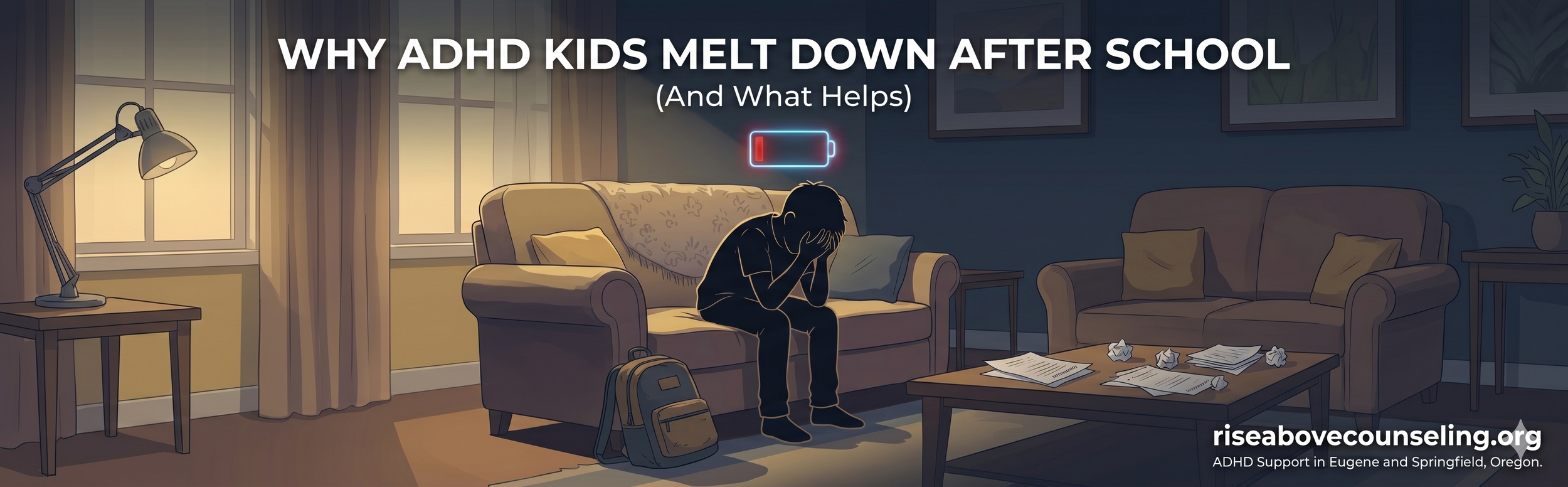
Your child holds it together all day at school… Then falls apart the moment they get home. (I can hear you sighing now)
emotional outbursts
irritability
refusing homework
shutting down or lashing out
If this sounds familiar, you’re not alone. Many parents of children with ADHD or attention challenges experience what’s often called the “after-school meltdown.” And despite how it looks, this isn’t just behavior. It’s a sign of brain and nervous system overload.
Why Kids “Crash” After School
School requires constant mental effort. Children are expected to:
focus for long periods
follow directions
manage emotions
sit still
ignore distractions
For kids with ADHD, this takes significantly more energy. By the end of the day, their brain is exhausted. When they finally get home to a safe environment, all that built-up strain gets released.
ADHD and Nervous System Overload
Children with ADHD often have difficulty regulating things like attention, impulses, emotions and stress. This means their brain is working harder all day to stay on track.
What looks like a meltdown is often:
👉 the nervous system coming out of over-control
Why It’s Worse at Home
Parents often ask: “Why does my child behave at school but not at home?” Because home is where they feel safe enough to let go. At school, they’re holding it together. At home, the system releases the pressure.
Common Signs of After-School Dysregulation
irritability or anger
emotional outbursts
refusal to do homework
shutting down or withdrawing
sensitivity to small frustrations
These behaviors are often misunderstood as defiance—but they are usually regulation issues. It’s easy as an exhausted parent to get trapped in the defiance/respect trigger and forget the underlying struggle your child is actually facing. Their intent isn’t to defy or hurt you, often it’s their only means of releasing stress and crying for help in a way that unfortunately feels counterproductive.
What Actually Helps
1. Reduce demands immediately after school
Give your child time to decompress before expecting homework or chores. Think of the “mom or dad coming home from work” trope where they are tackled by the kids and their partner desperately needs to tell them all about their crazy day at home. Adults need decompression, and so do our kiddos.
2. Support nervous system regulation
Activities like quiet time, movement, or calming routines can help reset the brain.
3. Adjust expectations
After-school is not the best time for peak performance. Knowing this can help level some underlying expectations to a more reality focused approach.
How Neurofeedback Can Help
Neurofeedback works by helping the brain improve its ability to regulate itself. Instead of just managing behavior, it supports:
emotional regulation
stress tolerance
attention stability
impulse control
Over time, many parents notice:
fewer meltdowns
improved emotional control
smoother transitions after school
better tolerance for homework
A Kid-Friendly Approach
At Rise Above Counseling, neurofeedback sessions are designed to be comfortable and engaging.
Children can watch:
Disney movies
animated films
family favorites
age-appropriate options for older kids
This allows the brain to train in a relaxed, low-pressure environment. It’s like taking the brain to the gym when it actually thinks it’s chilling watching its favorite movie.
ADHD Support in Eugene and Springfield, Oregon
Families in Eugene, OR and Springfield, OR often seek support when their child struggles with:
after-school meltdowns
focus and attention
emotional regulation
behavioral challenges
Neurofeedback offers a brain-based way to support these challenges. If your child seems to fall apart after school, it’s not a failure. t’s a signal.
With the right support, their brain can learn to regulate more effectively—making daily life feel calmer, more manageable, and more successful.
